Concept guide
Moving value across a border by stating the wrong number on a real invoice.
Trade mis-invoicing: what it means and what it does not
The deliberate misstatement of price, quantity or quality on trade documentation so that the payment accompanying a shipment differs from its true value. Over-invoicing transfers value to the exporter, under-invoicing to the importer; the goods themselves need not be misrepresented at all.
The misreading this term causes
It is frequently equated with smuggling. Nothing is smuggled: the shipment is declared, inspected if selected, and cleared. What is false is an assertion on a document, and no physical examination of the cargo will reveal it, because the cargo is exactly what the manifest says.
This guide exists because of that misreading rather than because the term is unfamiliar. Most of the vocabulary in this subject is ordinary English used in a narrower sense, and the narrowing is exactly what gets lost when a term travels from a legal instrument into a summary of it.
How it works in practice
Detection is a records problem across jurisdictions. The exporting customs authority holds one declaration, the importing one holds another, and the bank holds the settlement — each sees a third of the picture and they are reconciled long after the money has moved, if at all.
A worked case
An exporter bills a related importer one million for machinery worth six hundred thousand. Customs inspects the container and finds exactly the machinery described. The bank sees an invoice, a bill of lading and a payment that match each other. Four hundred thousand has crossed a border with a customs declaration and a banking record supporting it, and every institution that touched the transaction saw a complete and internally consistent set of documents. Nothing was hidden; the price was simply wrong, and no party to the chain was in a position to know it.
The case above is constructed rather than reported: it is the shortest arrangement of facts that produces the confusion this guide is about. Nothing in it is drawn from a specific investigation, and no jurisdiction is named, because the point is the structure rather than the instance.
What it governs in this dataset
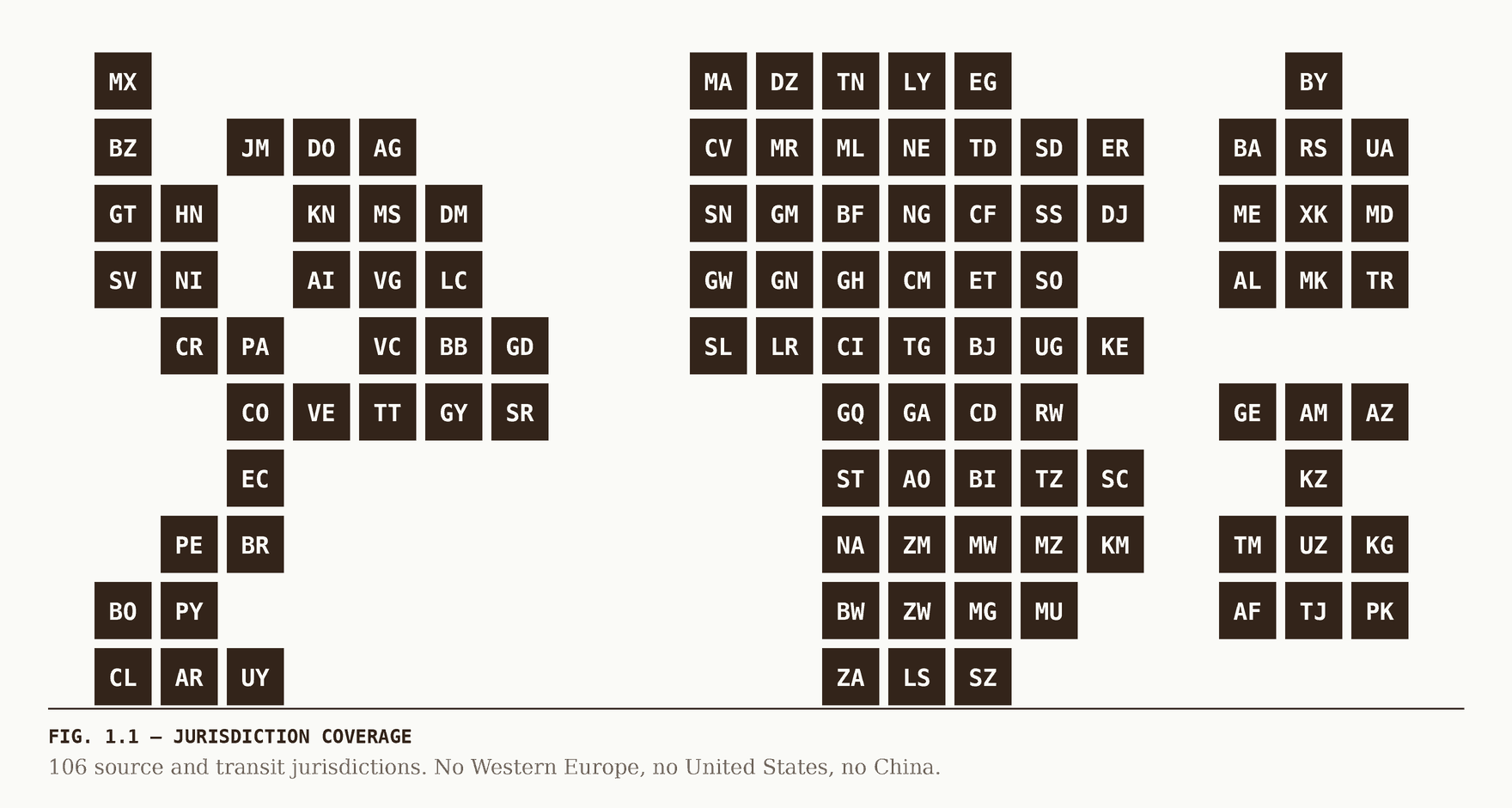
Why no aggregate figure is published. Every credible estimate of value moved this way is derived from trade-gap analysis, which compares what one country reports exporting against what its partner reports importing — and which captures ordinary reporting error, freight timing and currency conversion alongside deliberate misstatement. None of the 106 records here carries a value estimate for that reason. The concept is not an abstraction here: it determines what a record can state and how a reader should weigh it, and the figures move when the underlying sources do.
Where this appears: /illicit-finance/trade-based-money-laundering/, and on every jurisdiction record in the index. How each layer is verified is set out under sources and methodology.
Questions
What does "trade mis-invoicing" mean?
The deliberate misstatement of price, quantity or quality on trade documentation so that the payment accompanying a shipment differs from its true value. Over-invoicing transfers value to the exporter, under-invoicing to the importer; the goods themselves need not be misrepresented at all.
What is the common misreading of trade mis-invoicing?
It is frequently equated with smuggling. Nothing is smuggled: the shipment is declared, inspected if selected, and cleared. What is false is an assertion on a document, and no physical examination of the cargo will reveal it, because the cargo is exactly what the manifest says.
How does trade mis-invoicing work out in practice?
Detection is a records problem across jurisdictions. The exporting customs authority holds one declaration, the importing one holds another, and the bank holds the settlement — each sees a third of the picture and they are reconciled long after the money has moved, if at all.
Where does trade mis-invoicing show up in the jurisdiction records?
Why no aggregate figure is published. Every credible estimate of value moved this way is derived from trade-gap analysis, which compares what one country reports exporting against what its partner reports importing — and which captures ordinary reporting error, freight timing and currency conversion alongside deliberate misstatement. None of the 106 records here carries a value estimate for that reason. That figure is computed from the records rather than stated, so it moves when the underlying sources do.
Is there a worked example of trade mis-invoicing?
An exporter bills a related importer one million for machinery worth six hundred thousand. Customs inspects the container and finds exactly the machinery described. The bank sees an invoice, a bill of lading and a payment that match each other. Four hundred thousand has crossed a border with a customs declaration and a banking record supporting it, and every institution that touched the transaction saw a complete and internally consistent set of documents. Nothing was hidden; the price was simply wrong, and no party to the chain was in a position to know it. The case is constructed rather than reported — it is the shortest arrangement of facts that produces the confusion, and no jurisdiction is named because the point is the structure.
Related guides
- Ratification and implementation — Being bound by a treaty and having an offence a prosecutor can charge are different things.
- Predicate offence — Money laundering requires an underlying crime, and which crimes count is a national choice.
- Controlled delivery — The decision to let a detected consignment run rather than seizing it.